Today I tested Photoshop’s photomerge feature that I use to stitch my panoramas. The idea is to gain an intuitive understanding of how the feature works so I can reduce the failure rate of panorama stitching and save more time by optimizing the photos I take for panoramas.
Estimating minimum overlap required
The goal of this test is to find out what is the bare minimum overlap required for photomerge to work properly.
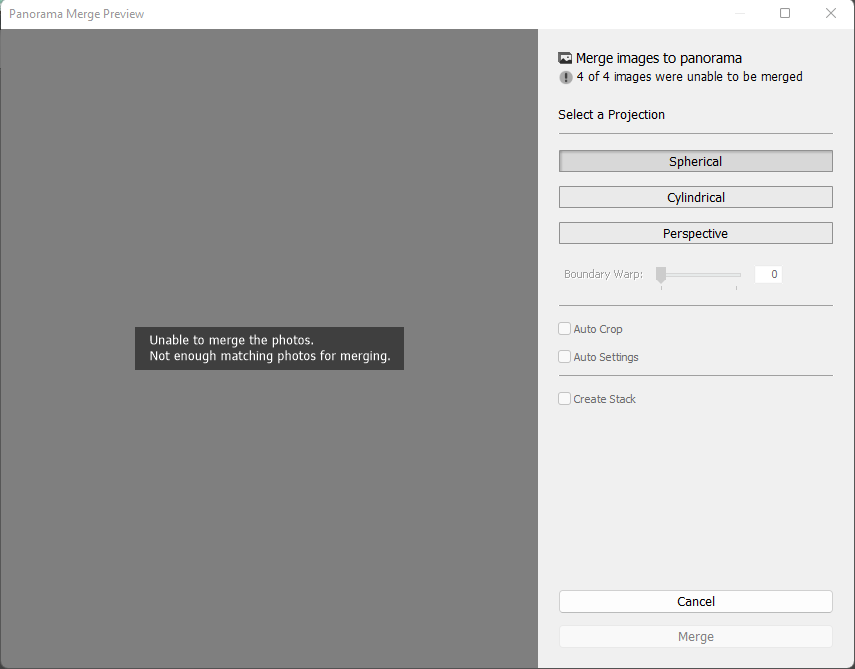
The first test makes use of 4 shots, with roughly 5% overlap between each image:

The merge fails as expected, for all 3 projections:
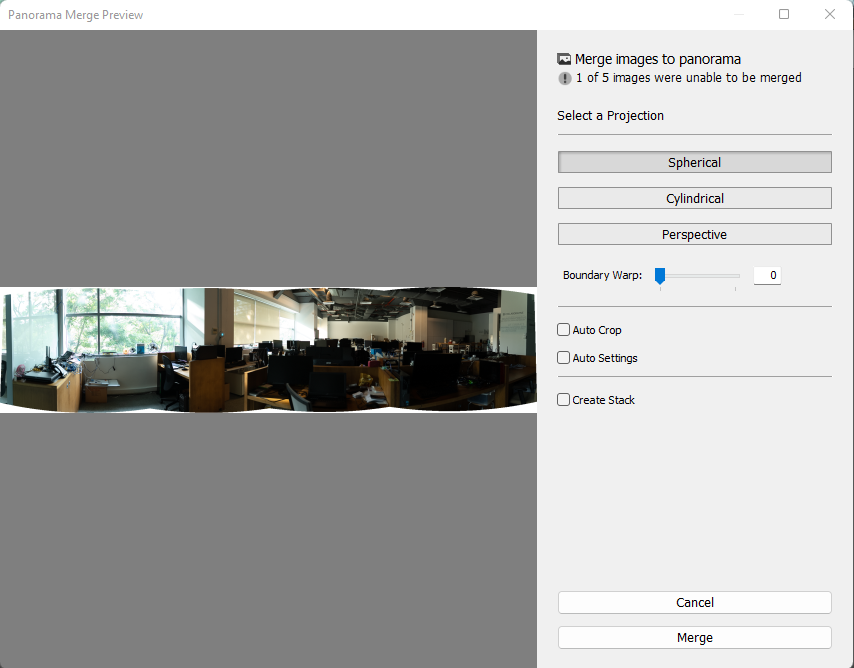
The second test makes use of 5 shots, with roughly 33% overlap between each image:

The merge succeeds, but not completely:
The final panorama:
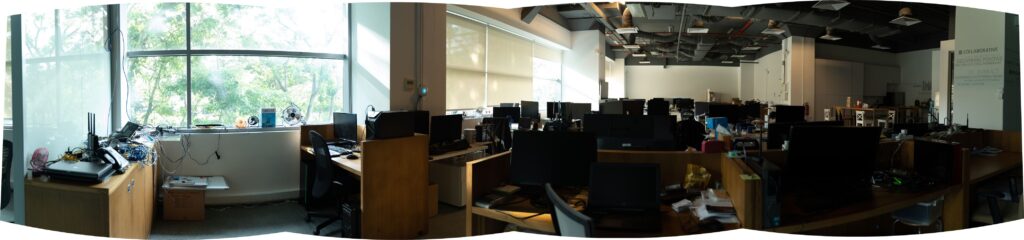
The very last image could not be merged. A few more hypothesis could be made about the photomerge feature from this observation:
- The content between images matter.
- The brightness and lighting conditions of the images matter.
- The overlap of colors matter.
I didn’t have time to conduct more tests, and the second test is representative of how I conduct my shots for panoramas, so I left the test at that.
Effect of focal length on panoramic outputs
The next test I wanted to conduct is to discover if there are visible differences in panoramas stitched from series of images captured at different focal lengths.
The first test makes use of 5 shots at 28mm, producing the following panorama:
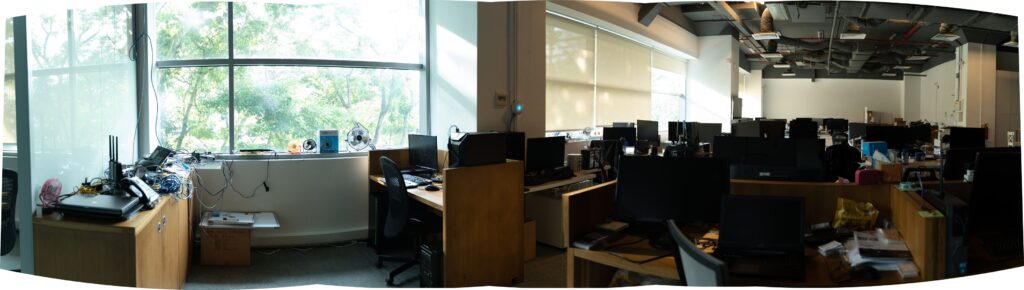
The second test makes use of 15 shots at 75mm, producing the following panorama:

28mm with 75mm overlap:
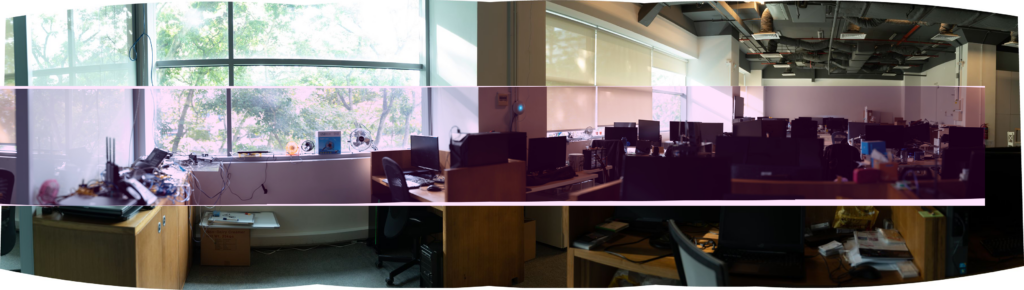
A closer look at the difference in quality (left 28mm, right 75mm):

I might have forgotten to re-focus my lenses after adjusting to 75mm, but the slight difference in perspective is subjective, so shooting with a shorter focal length is the more efficient way to produce quality panoramas.
Effect of aperture on panoramic outputs
The first panorama re-uses the panorama stitched with 5 shots at 28mm above, at f2.8 (1/13):
The second panorama consists of 5 shots at f11 (1.3s):
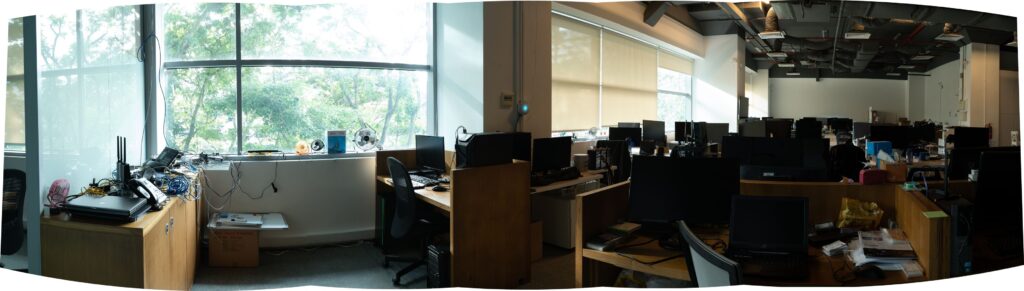
The results are fairly straightforward; a wider aperture produces clearer details for subjects that are closer/further than the focal point.
Minimum number of photos required for object removal
The purpose of this test is to find out how many photos are required to remove objects using photomerge. This is useful for removing moving subjects (e.g. people) from our panoramas.
It is conducted in a fairly straightforward manner; 2 similar shots are taken, 1 with the subject and 1 without.
Photo with the subject:
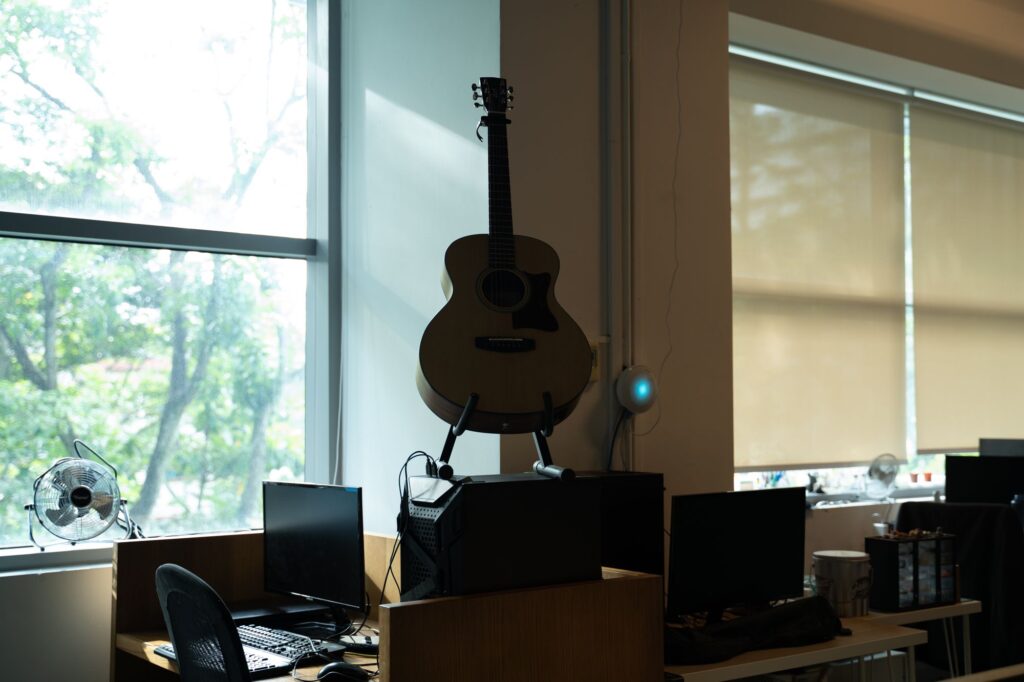
Photo without subject:

If the photomerge feature fails to remove the subject with only these 2 pictures, a copy of the shot without the subject is duplicated and added in as the third shot (to reinforce the removal of the subject).
Results were surprising; photomerge is able to remove the subject with only the 2 original shots, without any duplication required:
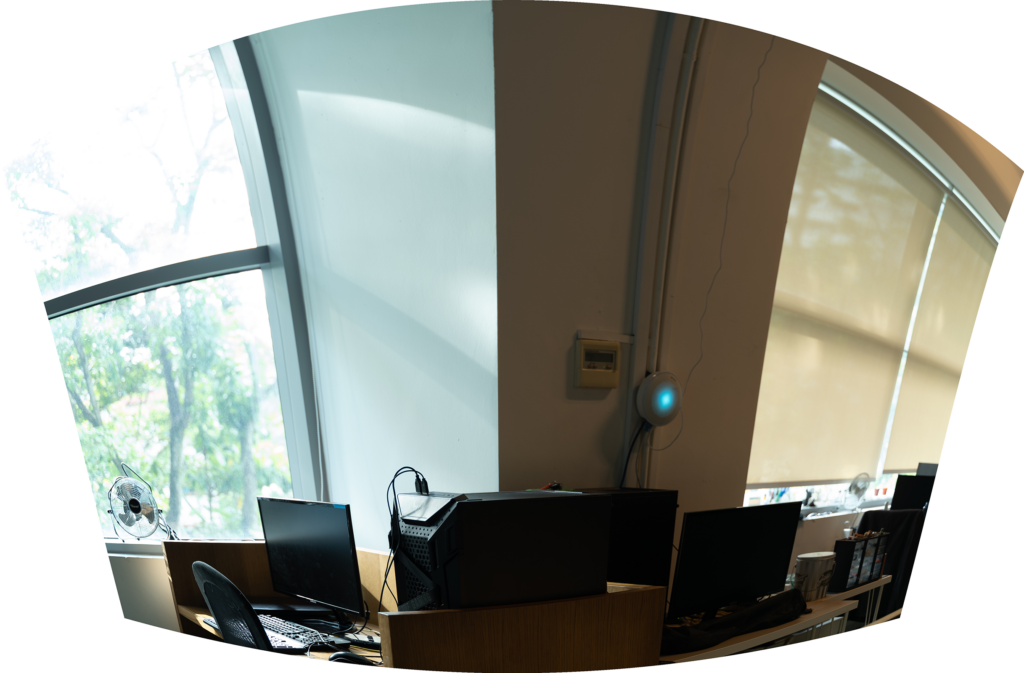
Unfortunately this is a bit more tricky with moving targets (people, etc). A separate test will probably have to be conducted for that.
Conclusions
- Shorter focal length is more efficient for shooting panoramas
- Use wider apertures as much as possible (at the cost of time efficiency)
- Subject removal can be easily achieved with at least 1 extra “clean” image
Leave a Reply